Window Condensation Inside vs Between Panes: What It Means and How to Stop It
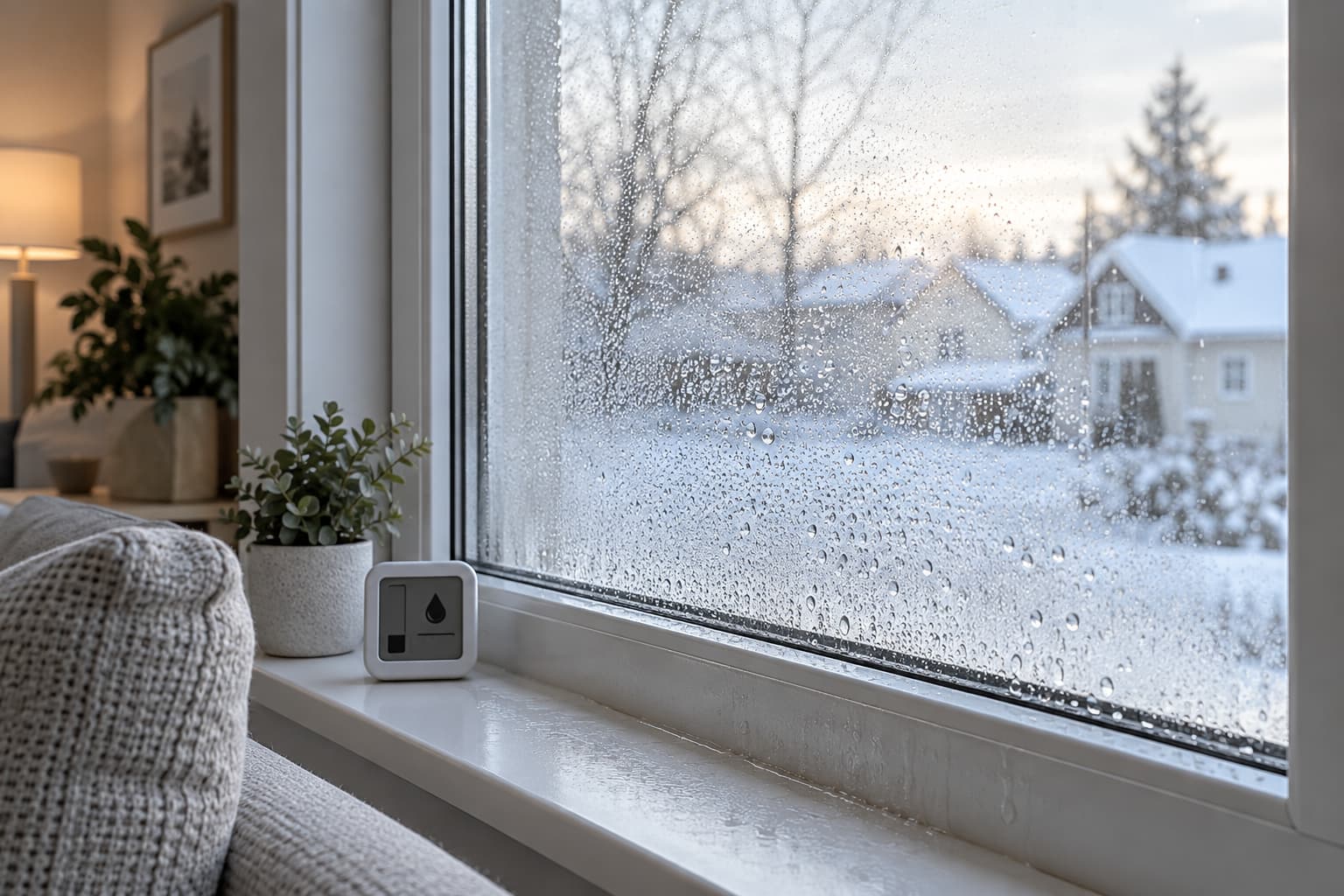
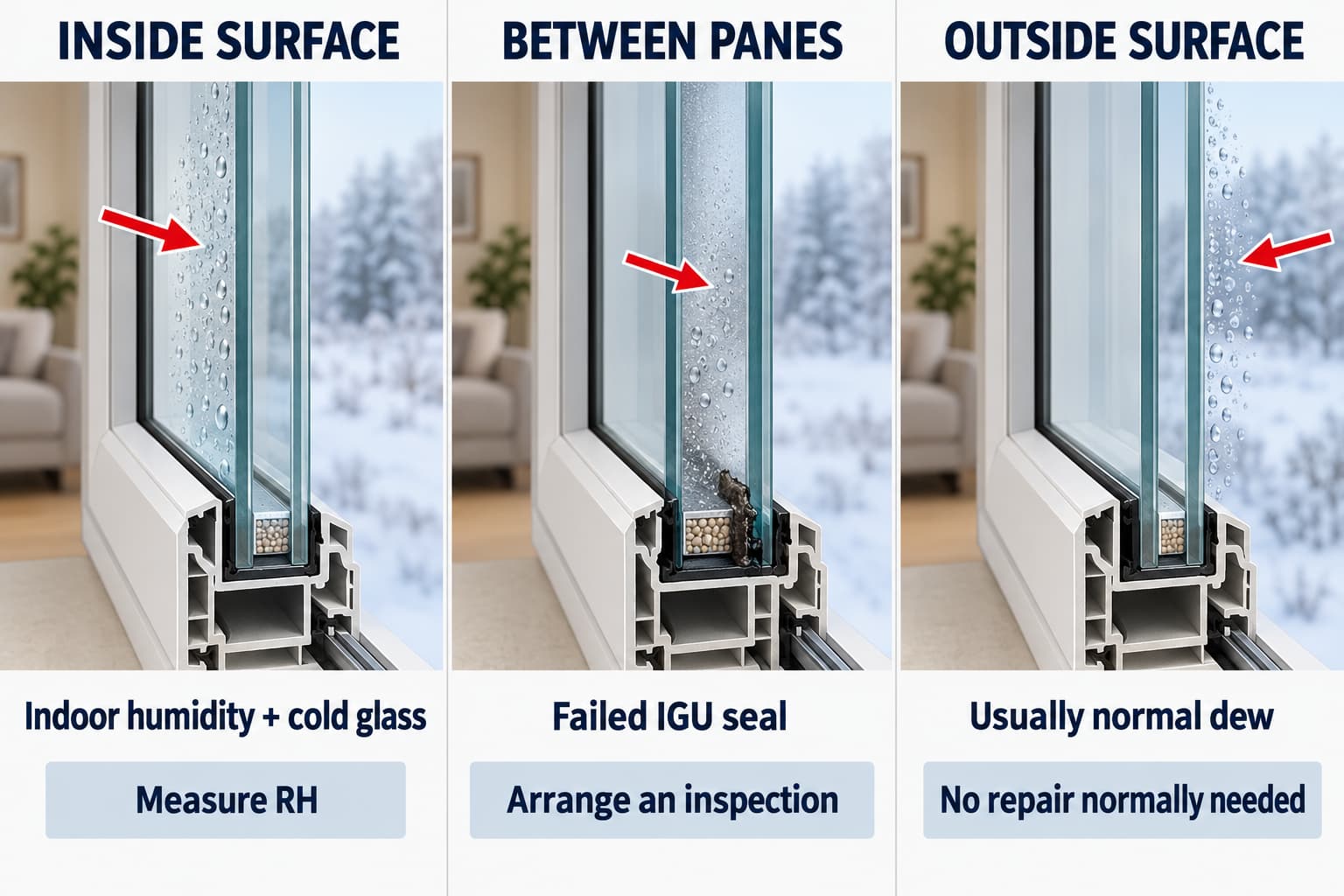
Window condensation inside a room usually forms when humid indoor air meets cold glass. Moisture between the panes of a double-pane window points to a different problem – a failed seal in the insulated glass unit. Condensation on the exterior surface is often harmless morning dew.
Before changing the ventilation or replacing a window, determine exactly where the moisture is located.
| Moisture location | Most likely explanation | First action |
|---|---|---|
| Room-facing surface | Indoor humidity is too high for the glass temperature | Measure relative humidity and reduce moisture |
| Between sealed panes | Insulated glass seal has failed | Check the warranty and arrange an inspection |
| Exterior surface | Outdoor air has reached its dew point against cool glass | Usually no repair is necessary |
| Frame, wall or trim | Condensation, an air leak or water intrusion | Inspect the surrounding construction |
First, Find Out Where the Condensation Is
Wipe the room-facing surface with a dry cloth. If the glass clears, the condensation is inside the room. If the cloudiness remains trapped beneath the accessible surfaces, it is probably between the panes.
Then check the pattern:
- One window only may indicate a colder pane, damaged weatherstripping, blocked airflow or a local construction defect.
- Several windows throughout the house usually point to elevated indoor humidity.
- Bedroom condensation in the morning often results from overnight breathing combined with closed doors, blinds or curtains.
- Moisture after cooking or showering suggests inadequate exhaust ventilation.
- Water around the frame, drywall or ceiling may be a leak rather than ordinary surface condensation.
A digital hygrometer provides more useful information than the appearance of the glass alone. Measure relative humidity near the affected room, but do not place the device directly on the windowsill or beside a vent.
Why Condensation Forms on the Inside of Windows
Condensation on the inside of windows forms when the glass surface cools below the dew point of the surrounding air. Warm air can hold more water vapor than cold air. When humid air reaches a cold window, it cools and releases some of that moisture as droplets.
Three variables determine whether condensation appears:
- Indoor relative humidity.
- Indoor and outdoor temperatures.
- The temperature of the glass surface.
This is why window condensation in winter can appear even when the same house has no problem during summer. As the outdoor temperature falls, the interior surface of the window becomes colder. Single-pane glass generally reaches a lower interior surface temperature than a modern insulated unit, but even efficient windows can collect moisture if indoor humidity is high enough.
Interior condensation does not, by itself, prove that the window is defective. It often shows that the humidity level is too high for the current outdoor temperature. However, persistent water on one window while comparable windows remain dry can indicate an air leak, failed weatherstripping, missing insulation or a thermal bridge around the opening.
How to Stop Window Condensation
The effective approach is to measure humidity, reduce unnecessary moisture and improve ventilation or airflow. Replacing windows should not be the first response unless inspection identifies a window or glazing failure.
Measure Indoor Humidity First
The EPA recommends keeping indoor relative humidity below 60%, ideally within a range of 30–50%. A level that is comfortable during mild weather may still produce condensation during a cold spell.
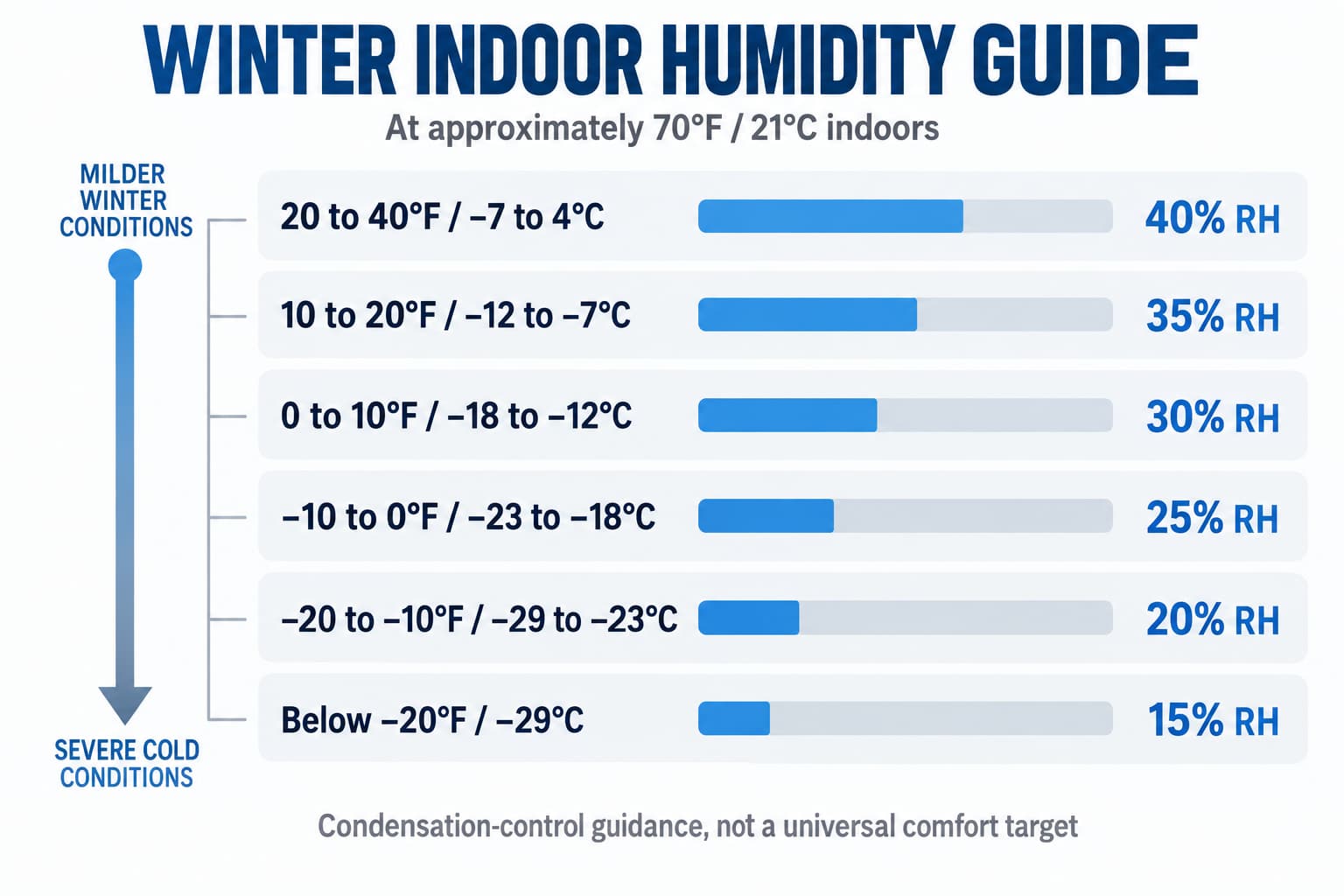
The following values are conservative guidelines for reducing winter condensation when the indoor temperature is approximately 70°F or 21°C:
| Outdoor temperature | Suggested maximum indoor RH |
|---|---|
| 20 to 40°F / −7 to 4°C | 40% |
| 10 to 20°F / −12 to −7°C | 35% |
| 0 to 10°F / −18 to −12°C | 30% |
| −10 to 0°F / −23 to −18°C | 25% |
| −20 to −10°F / −29 to −23°C | 20% |
| Below −20°F / −29°C | 15% |
These are window-condensation guidelines, not universal comfort or health targets. Do not force the entire house down to 15–20% RH unless severe outdoor conditions and actual condensation make it necessary. Very dry air can cause discomfort and damage some wood furnishings.
Track the reading for several days. If RH rises after showers, cooking or laundry, address those moisture sources before considering structural work.
Reduce the Main Sources of Moisture
Everyday activities can release substantial moisture into a house. Start with the sources that can be controlled immediately:
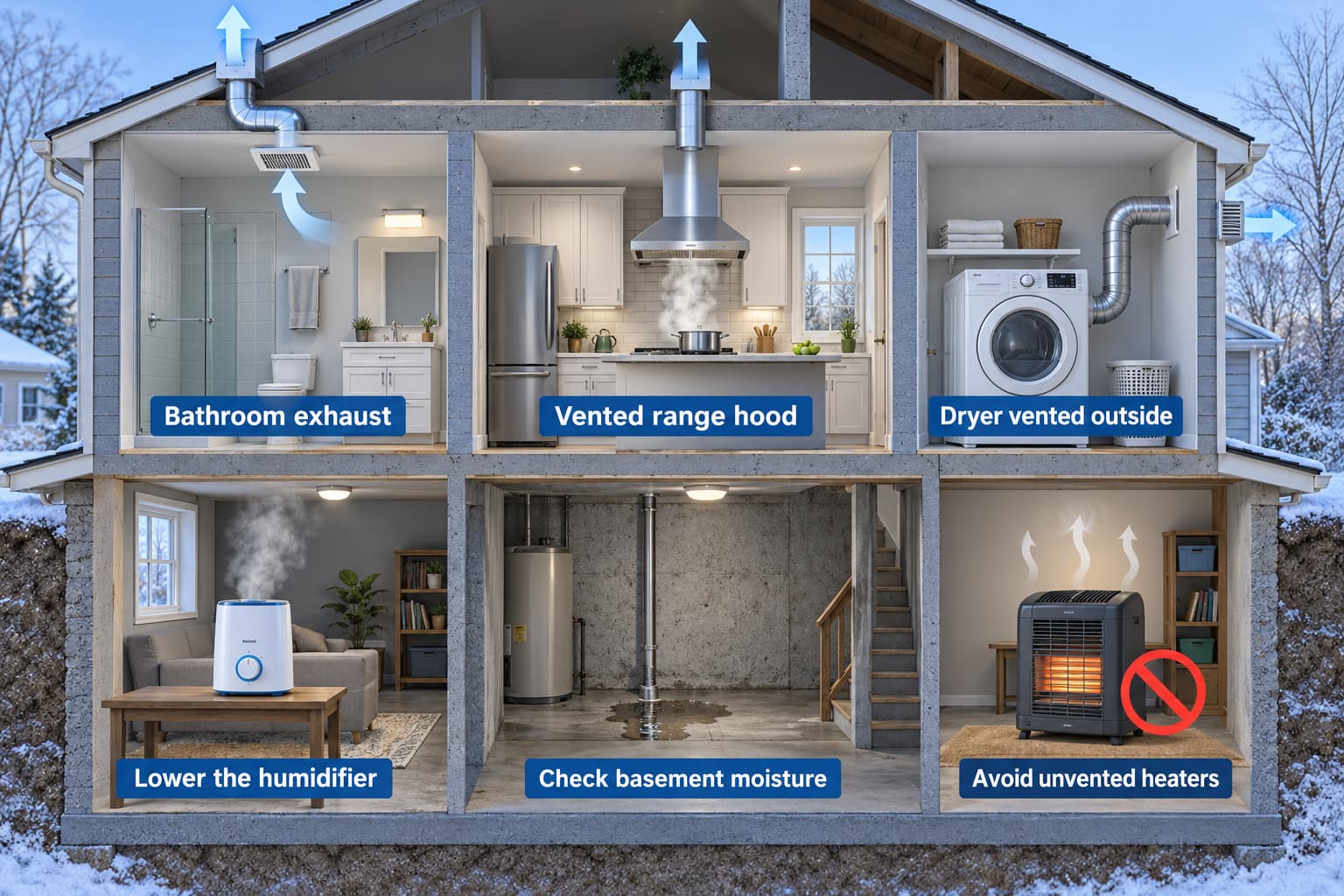
- Run the bathroom exhaust fan during a shower and afterward until humidity returns close to its normal level.
- Use an externally vented kitchen hood while boiling water or cooking, and allow dishwasher steam to disperse through normal room ventilation.
- Confirm that bathroom fans, range hoods and clothes dryers discharge outdoors rather than into an attic, wall cavity or crawl space.
- Avoid drying laundry inside living areas during cold weather.
- Turn down or temporarily switch off portable and whole-house humidifiers.
- Avoid unvented combustion heaters. They release water vapor into the room and can create additional indoor-air safety risks.
- Cover large aquariums when appropriate.
- Check basements and crawl spaces for damp soil, standing water or foundation leaks.
- Investigate plumbing leaks and recurring damp areas instead of treating them as a ventilation problem.
Plants contribute some moisture through transpiration, but a few houseplants are rarely the primary cause of widespread window condensation. Removing them should not replace humidity measurements or a proper moisture inspection.
Improve Ventilation and Airflow Around the Glass
Moisture is more likely to collect when warm room air cannot circulate across a cold window. Open blinds and heavy curtains, particularly overnight, and avoid placing furniture directly over heating registers.
Keep interior doors open when practical so that air and humidity can move toward the house’s ventilation system. Short periods of ventilation can also help when the outdoor air is cold and dry. Leaving a window partly open for hours is less efficient than brief, controlled airing.
If exhaust fans and normal ventilation cannot maintain an appropriate RH, a portable dehumidifier may help a damp room or basement. Persistent whole-house humidity may require inspection of the HVAC system, ductwork or mechanical ventilation.
Check the Window and Surrounding Construction
If indoor humidity is already appropriate but condensation remains severe, inspect the window itself:
- Make sure the sash closes and locks completely.
- Look for torn, compressed or missing weatherstripping.
- Check for cold drafts around the frame.
- Inspect the sill, trim and drywall for stains or deterioration.
- Compare the affected window with another window of the same type.
- Check whether insulation is missing around the opening.
Condensation restricted to the glass edge or frame may be associated with a colder spacer, aluminum component or thermal bridge. Water entering during rain or snowmelt is not ordinary condensation and requires a separate leak investigation.
What Condensation Between Window Panes Means
Condensation between window panes usually indicates that the seal around an insulated glass unit, or IGU, has failed. An IGU consists of two or more panes separated by a sealed space. Once outside air and moisture enter that space, the unit may become foggy, develop droplets or leave mineral deposits that cannot be wiped away.
Lowering indoor humidity will not remove moisture trapped inside a sealed unit. Drilling holes in the glass or attempting to open the unit at home can damage the glazing, compromise safety and void the warranty.
A failed seal does not automatically mean that the entire window must be replaced. Depending on its construction and condition, the repair may involve:
- replacing only the insulated glass unit;
- replacing the removable sash;
- replacing the complete window when the frame is damaged, distorted or obsolete.
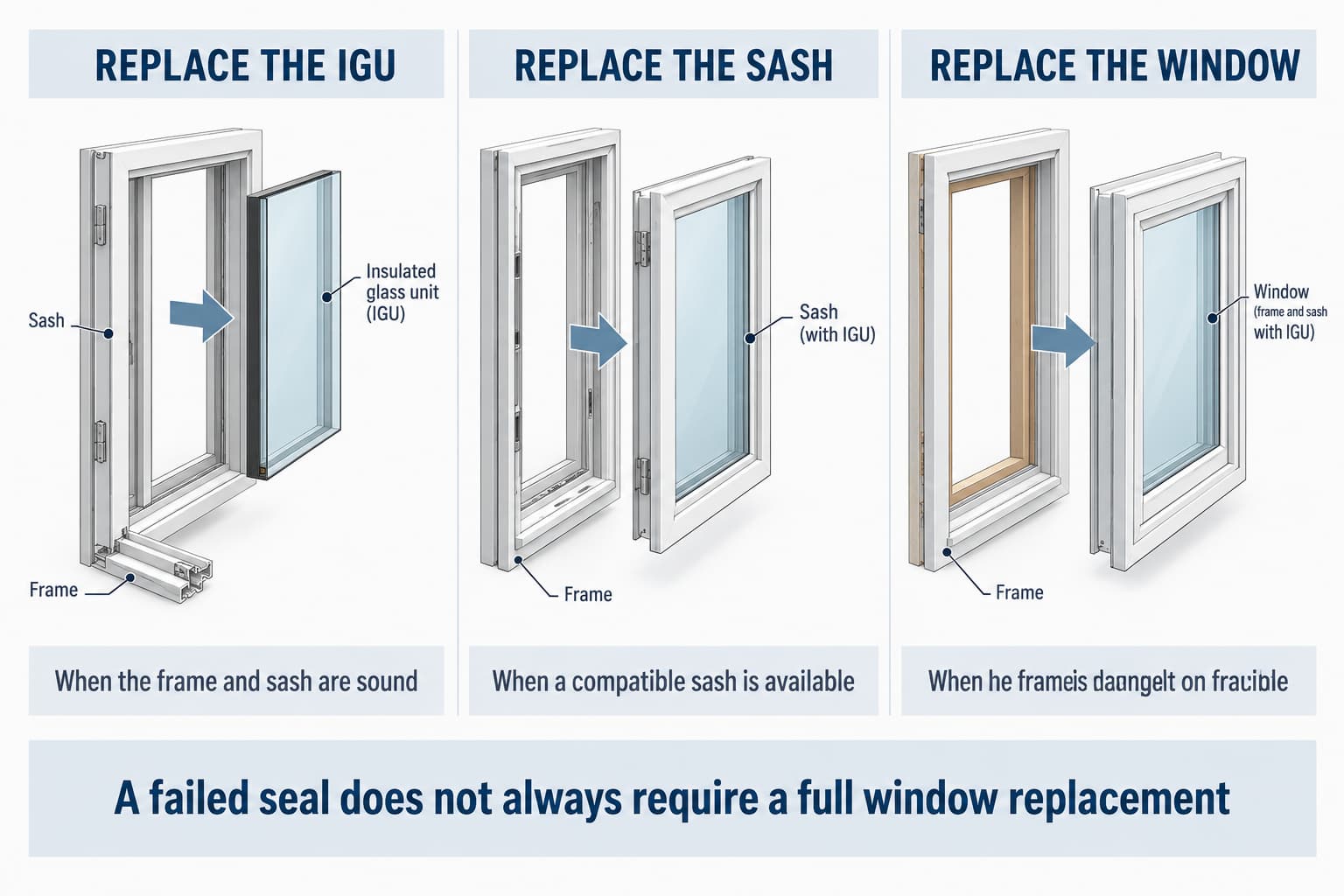
Fogging confirms that the seal has been compromised, but its appearance alone does not show exactly how much insulating performance has been lost. Ask the installer or manufacturer which component is replaceable and whether labor is included. Many manufacturers offer 10–20 years of coverage for insulated-glass seal failure, but exclusions, labor coverage and transfer rules vary.
Is Condensation on the Outside of Windows Normal?
Exterior window condensation is usually dew. It develops when the outside surface of the glass is colder than the dew point of the outdoor air, often during a clear, humid morning.
This can be more noticeable on energy-efficient windows because less indoor heat reaches and warms the exterior pane. The moisture normally evaporates after sunlight or warmer air reaches the glass.
No repair is usually needed unless water is entering the wall assembly, collecting beneath exterior trim or appearing together with damaged seals, flashing or siding.
When Window Condensation Can Lead to Mold or Damage
Water that repeatedly runs onto the sill can damage paint, caulk, drywall and wood components. It can also support mold growth on dust, wood, paper facing and other organic material.
Wipe up visible water and dry wet materials within 24–48 hours. Recurring mold, soft wood, peeling paint or swollen trim indicates that the moisture problem requires further investigation. If surrounding walls become wet while the glass remains relatively dry, check for plumbing, roofing or exterior water intrusion.
When to Call a Professional
Arrange a window, building-envelope or HVAC inspection when:
- moisture is trapped between sealed panes;
- condensation remains heavy at an appropriate indoor RH;
- only one window repeatedly becomes wet;
- the frame, sill or wall is deteriorating;
- water appears during rain or snowmelt;
- mold returns after cleaning and moisture control;
- several recently installed windows develop the same problem;
- exhaust fans do not vent outdoors or provide adequate airflow.
The appropriate specialist depends on the pattern. An HVAC contractor can assess humidity and ventilation, a window professional can evaluate the glazing and seals, and a building-envelope or roofing specialist can trace water intrusion around the opening.
Common Fixes That Do Not Remove the Cause
Several popular remedies change the appearance of the glass without controlling the moisture.
Bowls of salt, baking soda or cat litter cannot remove enough water vapor to regulate a room. Dish soap and anti-fog coatings may make droplets less visible, but the moisture remains in the air and can condense on frames or walls instead. Houseplants marketed as natural dehumidifiers do not replace mechanical ventilation or moisture control.
Repeatedly wiping the glass protects the sill temporarily but does not correct the humidity, cold surface or leak responsible for the water. Conversely, replacing every window without measuring RH can be an expensive mistake. A new window may reduce condensation by keeping its interior surface warmer, but excessive indoor moisture will still need to be addressed.
To prevent window condensation, use a simple sequence: locate the moisture, measure indoor humidity, control moisture sources, improve exhaust ventilation and airflow, and inspect the window if the problem persists. When the fog is between the panes rather than on an accessible surface, skip the humidity remedies and have the insulated glass unit evaluated.