French Omelette: How to Make It Smooth, Rolled, and Custardy
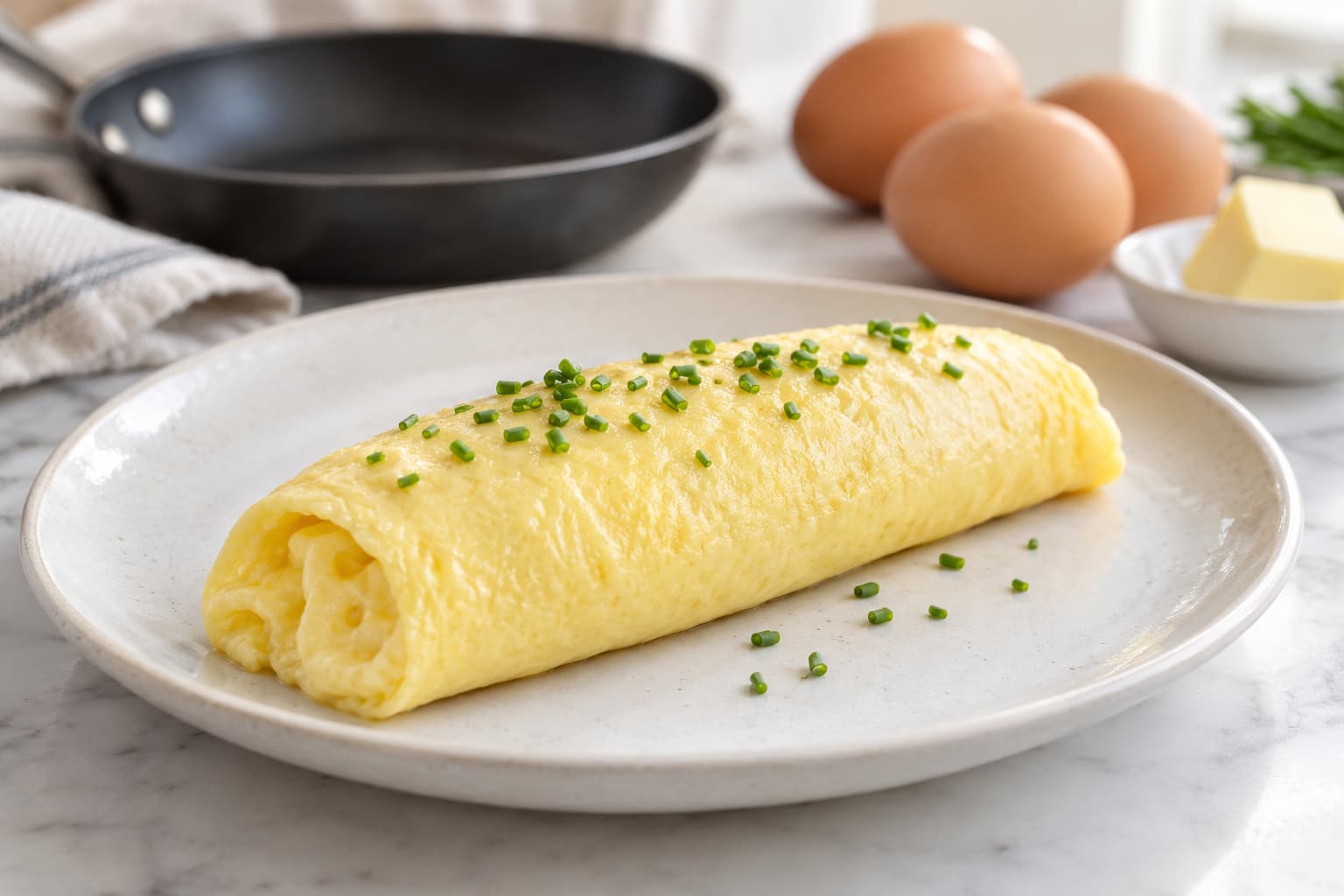
A French omelette should be smooth and pale on the outside, with a soft center that finishes cooking after the eggs leave the pan. The ingredient list is short. The difficult part is knowing when to stop stirring and start rolling.
This recipe makes one three-egg omelette. It is enough for one serving and works best in an 8-inch nonstick skillet.
| Parameter | Basic specification |
|---|---|
| Eggs | 3 large eggs |
| Butter | 1 tablespoon unsalted butter |
| Salt | 1/8 teaspoon |
| Pan | 8-inch nonstick skillet |
| Heat | Medium, adjusted as needed |
| Exterior | Smooth and pale |
| Center | Soft and moist |
| Shape | Rolled, seam-side down |
What Makes an Omelette French?
The name refers as much to the method as to the finished dish. The eggs are stirred as soon as they enter the pan, producing small, soft curds rather than one firm sheet. Stirring stops while the surface is still moist. The eggs are then levelled, allowed to join at the base and rolled into a compact cylinder.
A classic version has little or no browning. Its exterior is thin and tender, not crusted, while the middle remains soft. It may be served plain, finished with herbs or filled with a small amount of cheese.
French Omelette vs American Omelet
The American version is usually cooked until firmer, filled generously and folded in half. A French-style omelette depends on finer curds and a shorter finish.
| Feature | French omelette | American omelet |
|---|---|---|
| Exterior | Pale and smooth | Often golden or browned |
| Center | Soft and slightly moist | Usually fully set |
| Movement | Eggs are stirred continuously at first | Eggs are moved less |
| Curds | Small and fine | Larger and firmer |
| Shape | Rolled | Folded in half |
| Filling | None or a modest amount | Often substantial |
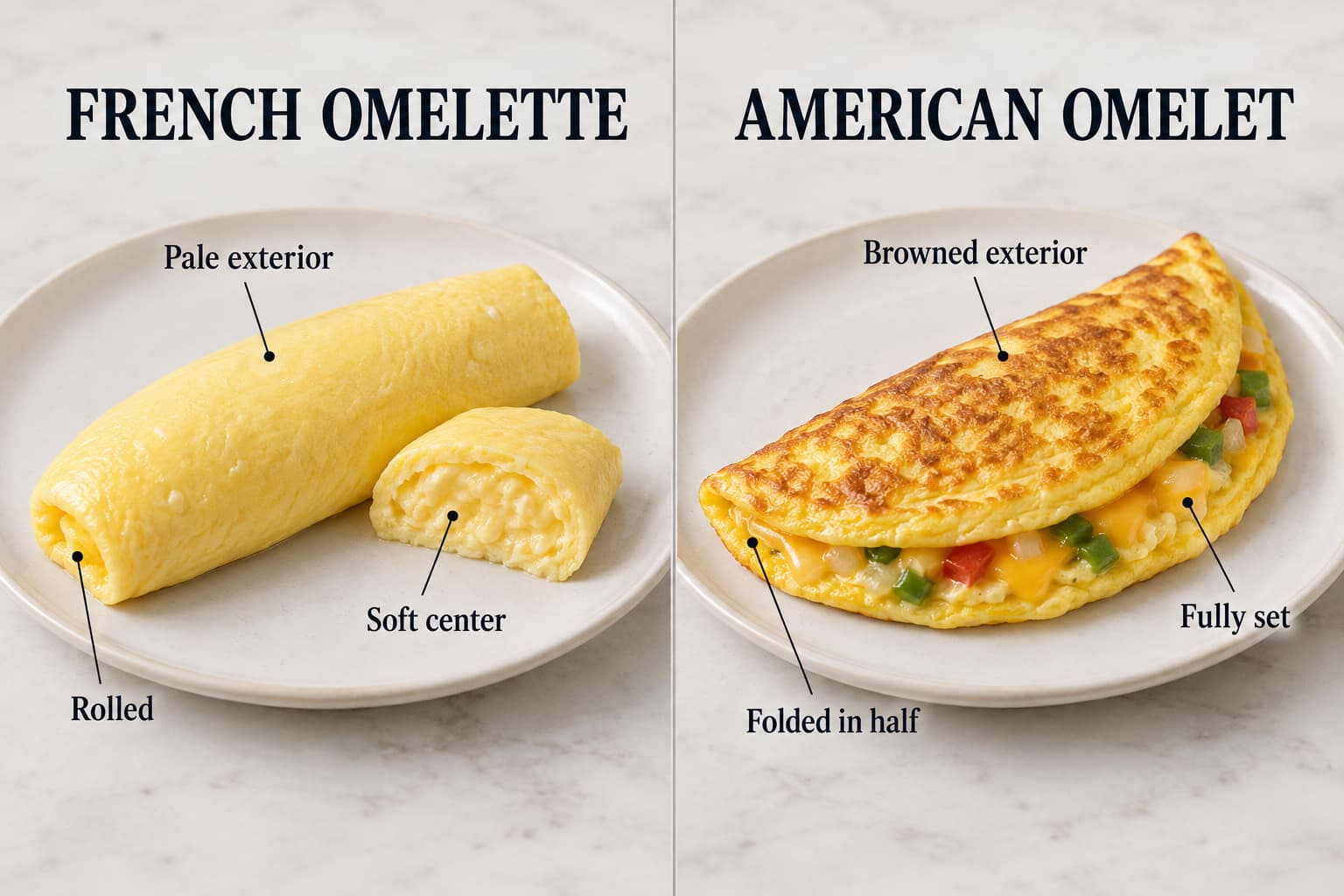
Cheese alone does not determine the style. A lightly filled rolled omelette can still use the French method; a browned egg sheet folded around a large filling is closer to the American form.
French Omelette Recipe: Ingredients and Pan
Ingredients
For one serving:
- 3 large eggs;
- 1/8 teaspoon salt;
- 1 tablespoon unsalted butter;
- pepper, optional;
- finely chopped chives, parsley, tarragon or chervil, optional;
- 1–2 tablespoons grated Gruyère or another filling, optional.
Some recipes add milk, cream or water. None is needed here. Using only eggs makes the change in texture easier to see and gives the cook one less variable to manage.
Mix the eggs and salt until no separate streaks of white remain. They should be evenly coloured but not whipped into a tall foam.
Which Pan Works Best?
For three eggs, an 8-inch skillet gives a useful balance: the layer is thick enough to stay tender but not so deep that liquid egg becomes trapped in the middle.
An intact nonstick surface is the easiest option for a first attempt. Sloping sides help when lifting and rolling the edge. A wide skillet spreads three eggs too thinly; a very small one leaves a thicker mass that is harder to cook evenly.
Use a silicone spatula or heat-resistant plastic fork. A metal fork may scratch nonstick coating.
Set out the plate, butter, utensils, herbs and filling before turning on the burner. Once the eggs enter the pan, there is little time to stop and prepare anything else.
How to Make a French Omelette
- Beat the eggs until uniform. Break up the whites completely, but avoid beating in excessive air.
- Warm the skillet over medium heat. Add the butter and swirl it across the base. Watch the butter rather than the control dial: it should melt and foam without developing brown flecks.
- Pour in the eggs and begin stirring at once. Make small circles with the spatula while moving the skillet back and forth. Work across the whole base so the edges do not set ahead of the center.
- Stop at the soft-scramble stage. The eggs should have fine curds but still look glossy and loose on top. Spread them into an even layer and leave the pan level briefly so the underside joins together.
- Add the filling, if using. Keep it near the center and use less than you would in an American omelet.
- Roll before the surface dries. Tilt the skillet away from the handle. Fold the near edge inward, then continue turning the omelette toward the opposite rim.
- Transfer it seam-side down. Tip the skillet over a warm plate and let the final turn happen as the omelette leaves the pan. Serve immediately.
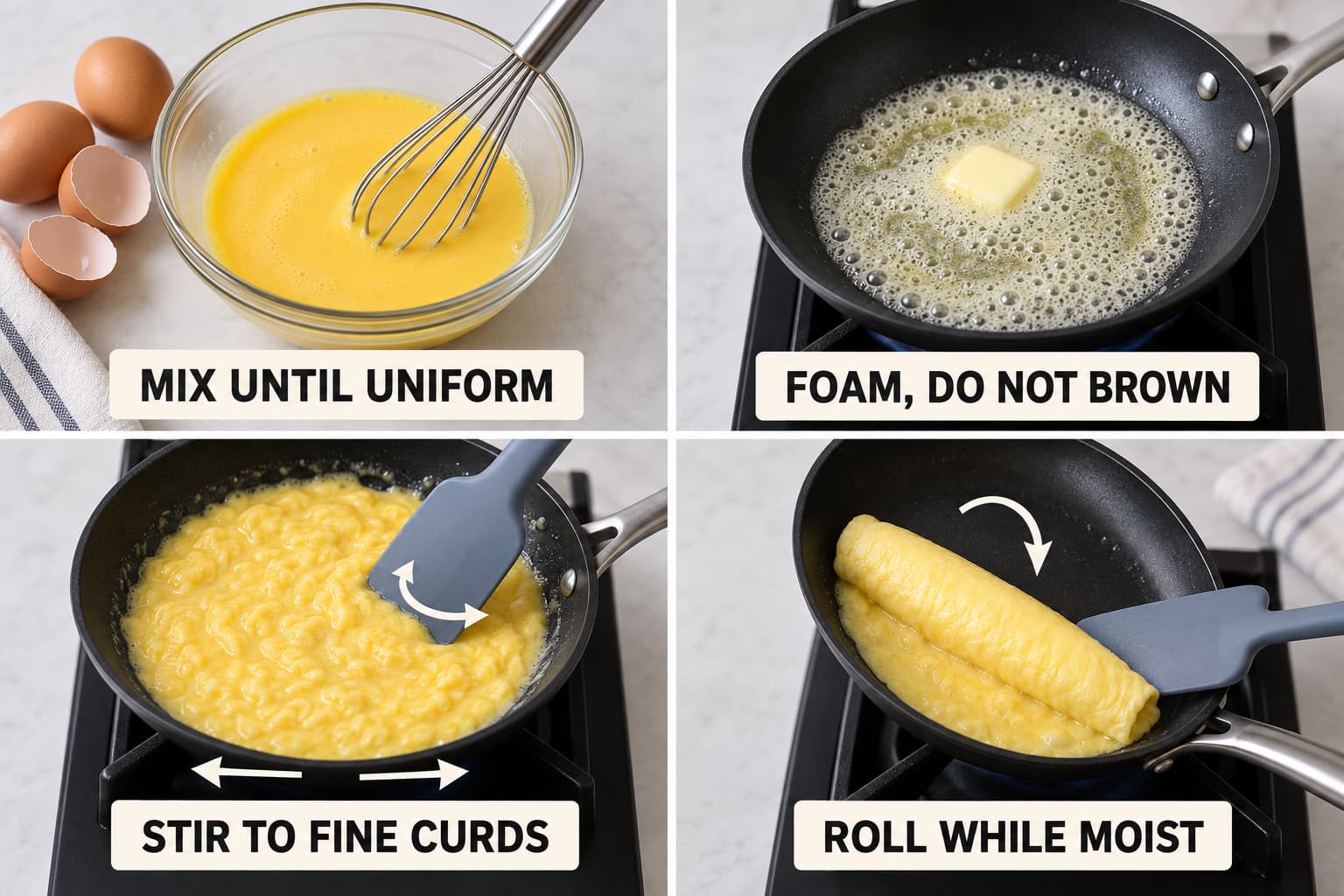
A fixed number of seconds is less useful than the appearance of the eggs. Burner output, pan construction and egg temperature all change the timing. Butter that browns instantly indicates excessive heat; eggs that remain completely liquid after stirring indicate too little.
Rolling Without Tearing the Surface
The base must be strong enough to lift, but the top should still be moist. Roll too early and loose egg escapes. Wait until the surface looks dry and the omelette becomes stiff, more likely to crack and already heading toward a rubbery center.
Angle the skillet so gravity helps move the eggs. Turn the first edge gently and keep the spatula beneath the fold instead of pressing from above. Pressing squeezes the soft center outward.
A small tear is not a reason to keep cooking. Finish the roll, place the seam underneath and shape the omelette on the plate while it is still flexible.
How to Know When It Is Ready
A well-made omelette does not need to look mathematically perfect. Check the points that affect texture:
- the outside is pale yellow rather than brown;
- the base releases from the skillet;
- the top is glossy but has no pool of raw egg;
- the sheet bends without breaking;
- the filling remains contained;
- the center feels soft after rolling.
Take it off the heat a little sooner than instinct suggests. The eggs continue to cook during rolling and plating. If the middle is already dry in the skillet, it will be firmer by the time it reaches the table.
Common French Omelette Mistakes
| Result | Likely cause | Next attempt |
|---|---|---|
| Brown patches | The pan was too hot | Reduce the heat or lift the skillet from the burner |
| Large, firm curds | The eggs were moved too slowly | Stir immediately and keep the skillet moving |
| Scrambled eggs instead of a sheet | Stirring continued too long | Stop while the curds are still wet |
| Dry or rubbery center | The roll started too late | Begin while the top remains glossy |
| Liquid egg runs out | The base did not join | Give the levelled eggs a few more moments |
| Omelette sticks | Damaged coating, little butter or poor heat control | Use an intact pan and coat the base evenly |
| Surface tears | The eggs are too wet, too dry or overfilled | Adjust the rolling point and reduce the filling |
| White streaks remain | The eggs were not mixed thoroughly | Combine the whites and yolks before cooking |
| Water appears around the filling | Vegetables were wet or cold | Cook, drain and warm them first |
If the butter is already brown before the eggs are added, wiping the pan and starting again is usually faster than trying to hide the flavour and dark flecks.
Can a French Omelette Have Cheese?
Yes. A French omelette with cheese still works if the filling is restrained. One or two tablespoons of finely grated Gruyère will melt quickly without making the roll heavy.
Chives, parsley, tarragon and chervil are also suitable. Cook mushrooms, spinach, asparagus or other vegetables beforehand and remove excess moisture. Ham should be finely cut; soft cheese or crème fraîche should be used sparingly.
Put the filling in shortly before rolling. A large mound cools the eggs, stretches the thin exterior and turns an easy fold into a repair job. If a substantial filling is the priority, the firmer American technique is more forgiving.
Egg Safety and a Soft Center
A custardy center may not be heated as thoroughly as a firm omelette. Appearance alone cannot confirm that every part has reached a safe temperature.
FDA food-service guidance specifies at least 145°F or 63°C for 15 seconds for shell eggs broken and cooked for immediate service. Different rules apply to pooled eggs and some other preparations.
Pasteurized shell eggs or pasteurized egg products are the safer choice when deliberately leaving the center soft. This is particularly important when cooking for pregnant people, young children, older adults or anyone with a weakened immune system. These groups should not be served undercooked ordinary shell eggs.
Do not use cracked eggs. Clean utensils and work surfaces after contact with raw egg, and serve the omelette as soon as it is cooked.
The method comes down to four decisions: mix the eggs completely, keep the butter from browning, stop stirring while the curds are still moist and roll before the surface dries.